How does the European Union work? What role does the Parliament play? Where does the Commission make the decisions? No one could answer these questions better than the German journalist Gregor Peter Schmitz, former EU correspondent for Der Spiegel and now Chairman of the Editorial Boards of Stern, GEO and Capital. Horst Ellermann spoke to him.
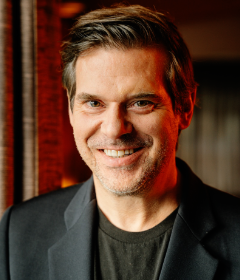
Horst: Hello Gregor, it’s great to have you back at CIOmove 2026.
Gregor: My pleasure. I still have fond memories of 2015, when we were at the World Economic Forum.
Back then you were still Der Spiegel’s correspondent in Brussels and interviewed Bill Binney in Davos, the former technical director of the NSA.
And one of the first whistleblowers in the US. It’s a shame, things have gone so quiet around the people associated with Edward Snowden.
Never mind. We don’t want to focus on the US. This year in Brussels, the focus is on digital sovereignty. What’s your take on that? Where do we stand? Where do we need to go?
Well, I think we’re all pretty much in agreement: the state of European sovereignty is dire. In the digital sphere, it’s perhaps even worse than in the military sphere. And it would be good if we could reduce our dependence on American hyperscalers. I can see promising approaches to achieving that. From Brussels, too. But we’re still very much at the beginning. The money the European Union has poured into projects like Gaia-X hasn’t really made us independent yet. What’s more, EU legislative initiatives such as the AI Act or the data protection directives seem counterproductive.
We’ll be discussing precisely these issues in Brussels together with the CEPS. Are you familiar with this think tank?
Of course. I spent six years in Brussels. CEPS is certainly a good choice.
Our old friend and colleague Stefan Borst, former correspondent for Fokus, says that things in Brussels always get worse and more complicated as soon as the European Parliament gets involved. Would you agree with that?
Of course, things get more complicated when the European Parliament gets involved. After all, it is the role of a parliament to discuss matters in first, second and third readings and to weigh up the various opinions. That naturally takes time. And sometimes the result is too complicated. But what is the alternative? Do we want decisions to be made as they are in China? Or as in America, where the president also holds a majority in Congress? Or simply governs by bypassing Congress? That’s quicker, of course. But things can also go wrong more quickly.
I’m looking forward to discussing this with you in Brussels. By the way, we’re staying at the Hotel Amigo. I hope that was a good choice.
Angela Merkel always stayed there too. It can’t be that bad. Besides, there are a few good bars in the area. I’m looking forward to showing them to you.